Flowering houseplant
Orchid
Phalaenopsis amabilis
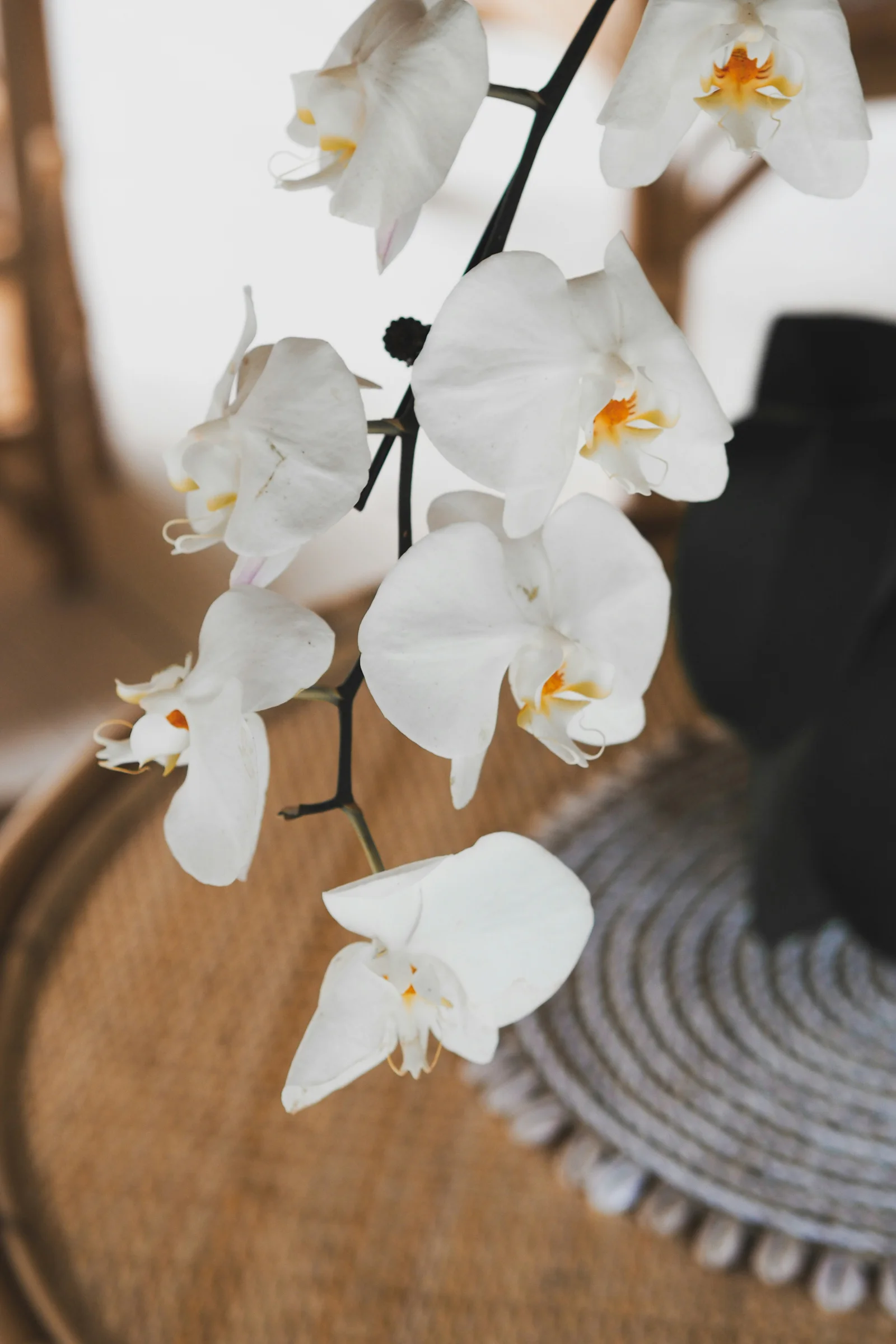
Orchids — most commonly the moth orchid, Phalaenopsis — are epiphytic tropical plants that grow on trees in their native Southeast Asian rainforests rather than in soil. Indoors they produce long-lasting flower spikes that can bloom for months at a time. With the right watering rhythm and bright indirect light they rebloom year after year.
A tree-dweller in disguise, easier than its reputation suggests.
Quick care
At a glance
- Light
- Bright indirect; east-facing window ideal
- Water
- Soak once a week, let roots dry
- Humidity
- 50-70%
- Temperature
- 18-27°C
- Potting mix
- Chunky orchid bark mix, never regular soil
- Toxicity
- Non-toxic to cats, dogs, and humans.
- Mature size
- 30-60cm tall including flower spike
- Growth rate
- Slow
- Origin
- Tropical Southeast Asia
Where to start
The first things to learn
Care
Orchid care comes down to bright indirect light, a weekly soak-and-drain watering, and chunky orchid bark instead of soil. The biggest mistakes are overwatering and planting in regular potting mix — both suffocate the roots. Done right, a Phalaenopsis lives and reblooms for decades.
ReadDormancy
After flowering, many orchids enter a rest period of 6-9 months where they put out new leaves and roots but no flowers. This isn't a problem — it's the plant building energy for the next bloom. Keep watering and feeding lightly during dormancy.
ReadOther questions